
I want to share a story from one of the most complex projects I’ve ever led. A joint venture for an offshore manufacturing startup in South Asia. On the surface, it was a straightforward goal… Reduce production costs and expand our global footprint. But, as anyone who’s led large change programs knows, the mechanics are only half the battle. The real challenge is people.
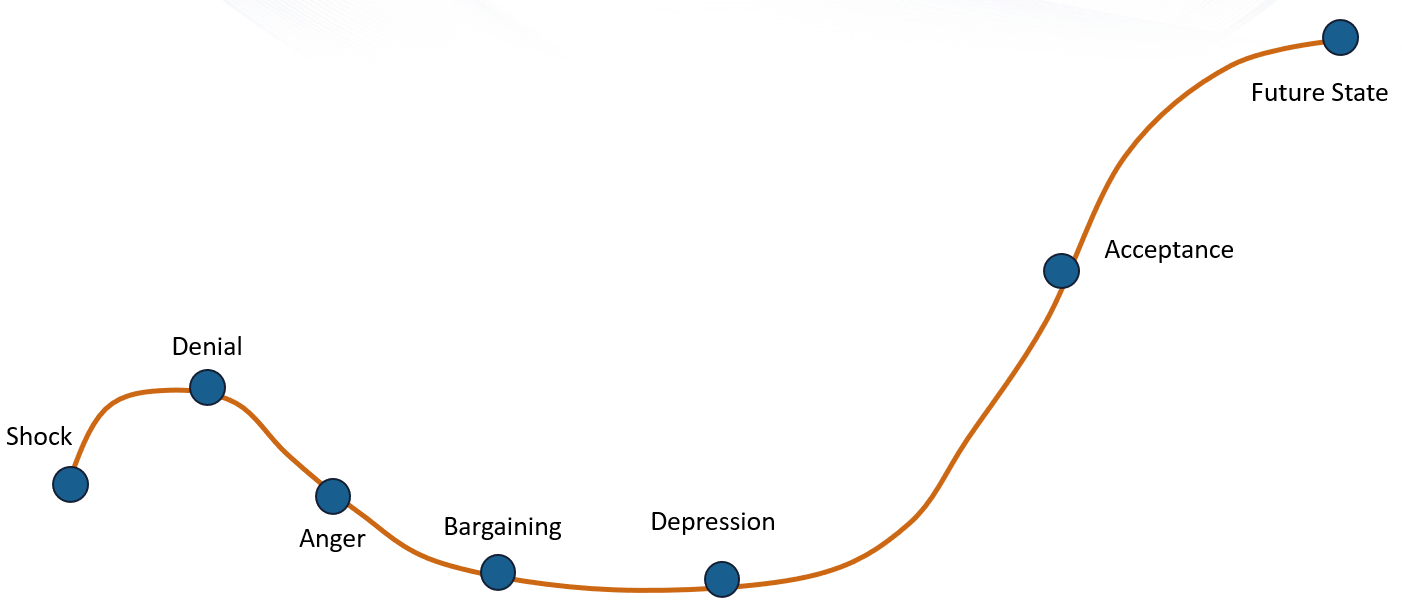
Looking back, the Kübler-Ross Change Curve is the model that best describes people’s emotional journey during significant change, perfectly reflecting what we experienced. It also provided me with confidence in reading people and how to support them.
The curve itself is made up of different stages of emotion. From Denial and Anger through to Acceptance (you would hope)
Denial
When the project kicked off, there was a quiet disbelief across our Australian team. The idea of transferring core manufacturing knowledge offshore sounded like fiction. After all, these were processes many had refined over decades. I could sense the discomfort and the “this won’t really happen” attitude hanging in the air. Denial wasn’t malicious it was self-protection.
Anger
Then reality hit. As the business case became more tangible, fear turned to Anger and frustration. The local team saw that once the knowledge transfer was complete, roles would be made redundant. That Anger wasn’t just about jobs! it was about pride, legacy, and a loss of identity. Suddenly, we weren’t just moving parts overseas we were rewriting careers.
Bargaining
This phase was subtle. It showed up in questions like, “Can we delay the next phase until we refine the process a bit more?” or “What if we keep some manufacturing in-house for quality control?” It was our team’s way of holding on to what they could. I respected it. It told me they still cared deeply. This is were I had to demonstrate value but at the same time an “11th hour” opportunity to prevent it from happening through demonstrating the risk of moving capability.
Depression
The lowest point was when we all realised that some assumptions in the business case were unraveling. Cultural differences, compliance issues, logistical missteps—what looked great on paper wasn’t translating in practice. People became disheartened. Even our executives began to question if we had overcommitted. I remember walking the plant floor and feeling the air of quiet resignation.
Acceptance
Acceptance didn’t mean everyone agreed with the decision. But when we created a visual roadmap, aligned milestones to real production outcomes, and brought visibility into the process, things started to shift. Asset management became our common language even though we never used those exact words. We were talking about people, process, plant, and performance. That united us.
We didn’t just manage assets. We managed the change through people. And in that, we began to accept what was in front of us, even if the outcome wasn’t perfect.
What I Learned
Change is emotional. You can have the best plan in the world, but if you don’t support people emotionally, it’ll fall flat. Its also personally drianing because you need to be empathic, sympathetic and at time apathetic (which is againt my nature)
Visibility and transparency creates trust. A visual roadmap helped stakeholders see the bigger picture and why certain delays or decisions were necessary without critisim but rather what do “we need” to do now.
Not all projects should finish. Sometimes, stopping is a braver decision than finishing a flawed journey. It can reflect on a leader who triggered the business case but when the realisation couldn’t been seen ahead it should have stopped.
Asset management is about people just as much as plant and performance. This experience reinforced that. Also having the opportunity to work around the world and seeing and feeling other cultures taught me a big lesson. VALUE is a common demoneonator. Understand it and you can navigate just about any situation.
The Kübler-Ross Curve isn’t just for grief, it’s also for growth. And as leaders, we need to meet people where they are on that curve. Because real change isn’t just a milestone it’s a human process.
Ready to Move Beyond Compliance?
Many organisations have the frameworks, systems, and data required for Asset Management success. The real challenge is embedding the behaviours, decision-making, and culture needed to sustain value.
Structured Change specialises in helping organisations bridge the gap between strategy and execution through integrated Asset Management and Organisational Change Management solutions.
Let’s start a conversation about how your organisation can realise greater value from its assets, people, and decisions.
#ChangeManagement #LeadershipLessons #EmotionalIntelligence #KüblerRossChangeCurve #OrganizationalChange #AssetManagement #PeopleFirst #ManufacturingLeadership #GlobalProjects #BusinessTransformation #LeadingChange #ChangeJourney #StrategicLeadership #WorkplaceCulture #EmpathyInLeadership